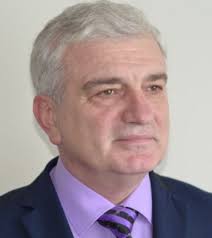
On 19 July 2026, the Serbian President Aleksandar Vučić visited sites that involve significant investments, including the construction of the new bridge over the Velika Morava River, which will connect the Belgrade-Niš highway and the municipalities of Svilajnac, Despotovac and Petrovac na Mlavi. During the visit, he stated that the construction work on the bridge would be completed within the next 24 months.
Vučić stated that total investments of approximately 60 million euros are expected in Svilajnac, including an investment in a new railway bridge on the Svilajnac-Vojska road and another investment in the Regional Training Centre for Dual Education, an objective also visited by President A. Vučić, who stated that the future of young people lies in dual education. At a rally in Vladimirovac, in southern Banat, President A. Vučić moved on to specific promises. He mentioned the construction of a Belgrade-Vršac highway, a decrease in medicine prices from August 1, 2026, and new investments in this part of the country. In tone, the speech was already an election campaign speech, with a series of promises addressed to the local electorate.
During the aforementioned visit, the Serbian President A. Vučić made some interesting statements: the future political transition will follow a precise order. According to his personal point of view, the government will resign, and only then will parliamentary elections be called. It was the first time he publicly detailed a sequence that had been circulating in political circles for weeks. “At that moment, when I receive the notification from the government and the National Assembly, I will call elections for members of the parliament,” A. Vučić stated. He added that he would remain in office as President of Serbia for only a short time, “a few days or two weeks at most,” because, he also specified, he had “many important tasks” to fulfil before resigning from office.
These statements come after a long period of serious pressure for the Serbian Government caused by mass protests since the Novi Sad train station disaster in November 2024. A. Vučić's second term as President of Serbia ends in 2027 and, according to the law, he cannot run for president again.
It is significant to note that A. Vučić rejected the legal option of becoming Prime Minister without holding parliamentary elections: “this is not an option for me”, insisting on “a vote from the people”. Furthermore, A. Vučić was keen to emphasize that he would not campaign while he was president and would seek support for the “United Serbia” list by touring the country. Serbian President A. Vučić made a surprise announcement for the first time on 18 July 2026 regarding the electoral list of the ruling coalition. In a telephone conversation with the media, he stated that the list would be called “United Serbia” and announced that he would enter the campaign without holding state positions. The name “United Serbia” is expected to bring together several partners of the current ruling coalition under one electoral roof. He added that he will join ”United Serbia” list after resigning and submitting all the documentation.
However, the Serbian Constitution allows the parliament, where there is a majority, to elect a new prime minister without calling parliamentary elections. However, A. Vučić explicitly rejected this. ”The government and I could resign, and the National Assembly could elect me as prime minister within two days, if I have a majority in the National Assembly, but this is not an option for me”, A. Vučić was keen to clarify.
Instead, President A. Vučić insists on a mandate that comes directly from the electorate. ”When and if I request a vote from the people for that position, only after I receive that vote from the people can I assume it”, specified A. Vučić. The message sent is very clear: a return to the executive office of prime minister, if it is to happen, must go through an electoral cycle rather than a parliamentary shortcut.
At the same time, A. Vučić emphasized his current role. Although he remains president, he said, he would not lead an election campaign. “I will not participate in the campaign,” he emphasized, linking any active efforts on the ground to the moment he ceases to be head of state.
According to A. Vučić, the entire program is based on one thing: the resignation of the government. Until this is submitted and the National Assembly and the president are officially notified, the process of setting the date for parliamentary elections remains open. This means that the pace of the transition is controlled by the very top of the executive branch, not by a fixed established calendar.
For the period after his resignation as President of Serbia, A. Vučić promised a classic election campaign, conducted on the ground. ”I will get in the car, my Skoda is waiting for me, and I will travel around Serbia from place to place to ask for people’s support”, he said, referring to the list of the “United Serbia” coalition around which he intends to mobilize voters.
As expected, this kind of transition has raised an open constitutional question: where is the line between the office of head of state and a party campaign, when only “two weeks at most” separate them. A. Vučić claims to stand by this process and postpone the election campaign until the end of his presidential term. Critics warn that any transition of a president to an executive office tests the separation of institutions, regardless of the formal order of the stages.
The entire development is described in detail by A. Vučić - first the resignation of the government, followed by parliamentary elections to establish a majority in the National Assembly in Belgrade and the the designation of A. Vučić as the future Prime Minister of Serbia. It gave rise to an interesting and provocative question: will the detailed plan described by the Serbian President, A. Vučić - to transition from the current position as the President of Serbia to the executive position of Prime Minister of Serbia - lead to a democratically and clearly obtained mandate or could it be a carefully and meticulously planned political manoeuvre?

© Copyright 2026 Ingepo Consulting SRL.
All rights reserved.
ISSN: 1843-701X
Requirements for publishing Terms and ConditionsThe site and the magazine are available for advertising. Please contact us for details.

 Deschide in romana