On December 28, 2025, Kosovo organised early parliamentary elections after a long period of fierce competition between political parties, which resulted in institutional deadlocks and polarizing rhetoric. But now a surprise occurred in the form of an unexpectedly convincing victory for the Vetëvendosje Movement (LVV). The elections on December 28 brought the LVV party, led by Albin Kurti, a spectacular victory, which it achieved mainly due to the weaknesses of the opposition parties, as it was perceived internationally. As a result, it is significant to emphasize that, according to the preliminary results of the Central Election Commission (CEC), LVV obtained 49.30% of the votes, without taking into account conditional and diaspora votes. "This is a spectacular victory for LVV, which the political opposition in Kosovo has awarded due to the total lack of ideas on how to manage A. Kurti's strong populism," as analyst Artan Muhaxhiri pointed out.
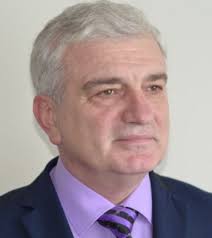
Preliminary data released by the CEC show that the opposition parties recorded results that can be classified as below expectations, given the developments in Kosovo since the last parliamentary elections: the Democratic Party of Kosovo (PDK) obtained 21.01% of the votes, the Democratic League of Kosovo (LDK) 13.59%, while the Alliance for the Future of Kosovo (AAK) 5.68%. The Social Democratic Initiative, with only 1.72% of the votes, failed to cross the electoral threshold. The Serbian List (LS), the largest party of Kosovo Serbs, obtained 4.74% of the votes. Professor Dritëro Arifi[1] considers the LVV victory to be the result of several interconnected factors - the "strong propaganda" of this party, as well as the weaknesses of the opposition parties, which failed to be sufficiently active and present the expected expertise. "The most important thing is that citizens noticed the lack of leadership in the opposition parties, as well as a person who could change the situation," as D. Arifi emphasized to the media.
Based on preliminary results, LVV is expected to have 56 seats in the Kosovo Assembly, PDK 23 seats, LDK 15 seats and AAK 6 seats. LS claims to have won all ten seats reserved for the Serb community in the Kosovo Assembly, but it remains questionable whether the other Serb party, Nenad[3] Rašić's Party for Freedom, Justice and Survival[2], will manage to win a seat. Based on political discussions, LVV is on track to repeat or surpass its 2021 election result, when it obtained 50.28% of the vote. At that time, it created a parliamentary majority without a coalition with other Albanian parties, but only with MPs from the other non-Serb minorities, who also have 10 guaranteed seats in the Kosovo Assembly. LVV leader A. Kurti, after the announcement of the preliminary results by the CEC, stated: “the sooner the election results are certified, the sooner the institutions will be established.” He invited other parties to cooperate on international agreements, saying that this step would be a test for possible further cooperation, including on the issue of electing the country’s president in the spring of 2026. “Of course, we need to discuss this issue with the opposition. But first, we need to discuss international agreements,” A. Kurti emphasized.
It is significant to mention here the reactions and positions expressed by the leaders of the other political parties that participated in the early parliamentary elections in Kosovo. The leader of the PDK, Bedri Hamza, did not react after the end of the voting process. The leader of the LDK, Lumir Abdixhiku, congratulated the winner of the elections, stating: "Kosovo needs a functioning democracy". He assumed responsibility for the poor result of his party, not ruling out the possibility of his resignation. The leader of the AAK, Ramush Haradinaj, immediately after the closing of the polling stations expressed his satisfaction with the result obtained by his political party. The leader of the LS, Zlatan Elek, after the publication of the preliminary results by the CEC, wanted to emphasize that his political party won over 90% of the votes of the Serbian community and "all ten mandates" of deputies were reserved for this community. However, he emphasized that, for the final result, the LS is waiting for the CEC's assessment. However, it is worth noting that, according to developments on the political scene in 2025 in Kosovo and political statements, the challenges awaiting the new parliamentary majority, but also the new government, including the election of the country's president in the spring of 2026, will no longer allow for the creation of a favorable environment for the adoption of arrogant positions at the LVV level, positions that were distributed by A. Kurti and received by political opponents after the parliamentary elections of 2021 and after those of February 9, 2025. "We are not used to seeing A. Kurti in this way. But, this is a positive thing. However, from my point of view, his body language betrayed him. Normally, the language was that of a winner, but he did not have the enthusiasm of a winner", as political scientist D. Arifi has now emphasized, considering that A. Kurti, who is expected to be prime minister for the third time, can form a new government only with his party and the minorities non-Serbs. A coalition with another Albanian party would be a desirable outcome for A. Kurti, as estimated by D. Arifi and other political analysts.
In the context of recent developments in Kosovo, it can be estimated that the dissensions and the political gap already created between the main political formations in Kosovo, LVV, PDK and LDK, make it impossible for LVV to support and form a coalition with at least one of the two opposition political formations. "It will be very difficult for A. Kurti to convince PDK and LDK to stay in the chamber, to reach the quorum of 80 deputies for the election of the president. LDK and PDK believe that President V. Osmani, with many of her actions, helped LVV", as emphasized by political analyst Artan Muhaxhiri who agrees that this change could facilitate the formation of alliances if A. Kurti's party does not obtain an absolute majority again. He added that the refusal of cooperation between political parties to elect the president could lead the country to elections again, even this spring, when V. Osmani's mandate ends in April 2026. Political scientist D. Arifi expresses his opinion that if LVV surpasses the 2021 result, A. Kurti will analyze whether he needs another mandate for President V. Osmani or intends to propose another candidate. According to him, the frameworks established for the Albanian opposition political parties, based on the number of seats won in the Kosovo Assembly, do not leave them much room for maneuver when it comes to electing the president for the next term. "The opposition will make a quasi-pragmatism, in this case forced, to stay in the hall, because the other alternative is early elections, in which, if the opposition emerges as problematic, then A. Kurti could win 60-70% of the total votes," as D. Arifi emphasized.
In conclusion, we can say that the early parliamentary elections of December 28, 2025 were the result of the precarious situation formed on the political scene in Kosovo as a result of the disagreements and clashes between political parties, which, after the elections of February 9, 2025, failed to form the Assembly of Kosovo by October 10, 2025. A. Kurti then failed to obtain enough votes in the Assembly of Kosovo to form a new government. The second mandated candidate, Glauk Konjufca, also from LVV, also did not receive the required number of votes and failed to form a new government, which forced the President of Kosovo, V. Osmani, to announce early parliamentary elections.
In the context of the situation in Kosovo during 2025, we must not forget that, while A. Kurti aims to form a new government, the CEC still has work to do until the announcement of the final results of the early elections on December 28, as the votes for deputies, those from the diaspora, conditional votes and those of people with special needs must be counted. All these steps also have deadlines for complaints, which may be the reason why it will take a few more days until the announcement of the final results and a few more weeks until the formation of the new executive in Pristina.
[1] Dr. Dritero Arifi is a professor at the Department of Political Science - University of Business and Technology - UBT in Pristina. He has also received a WUS-Austria scholarship twice. His expertise includes security issues, European foreign policy and democratization. He holds a PhD in political science from the University of Vienna; Dr. D. Arifi worked as an advisor at the Ministry of European Integration of Kosovo for over five years.
[2] For Freedom, Justice and Survival is a minority Serb political party in Kosovo and is led by Nenad Rašić. This political party was founded as a civic initiative and participated in the 2021 Kosovo parliamentary elections. Its candidates included Rada Trajković, former Minister of Family and Services in the government of Serbia from 1998 to 2000, and Cvetko Veljković, former Head of the Office for Communities in the government of A. Kurti. The organization was supported by Nenad Rašić and his Democratic Progressive Party. During the election campaign, C. Veljković and N. Rašić, together with A. Kurti, visited Štrpce.
[3] Nenad Rašić (born 27 January 1973) is a Kosovo Serb politician who, in 2006, was one of the founders of the Independent Liberal Party (SLS), a party of the Serbian minority in Kosovo. On 9 January 2008, N. Rašić was appointed Minister of Labor and Social Welfare of Kosovo, as part of Hashim Thaçi's cabinet, and held this position until 2014. N. Rašić stated that the best period of development of the "political being of Serbs" was between 2008 and 2012. He was appointed Minister of Communities and Repatriation in Kosovo on 1 December 2022. Previously, he was Minister of Labor and Social Welfare of Kosovo from 2008 to 2014, and a member of the Assembly of Kosovo from 2014 to 2017. Known for his moderate views, N. Rašić was one of the founders of the Independent Liberal Party (SLS) and its senior member until his removal from the party in 2013. From 2014 to 2024, he was the President the Progressive Democratic Party (PDS), which he led until the registration of the For Freedom, Justice and Survival (SPO) party.

© Copyright 2026 Ingepo Consulting SRL.
All rights reserved.
ISSN: 1843-701X
Requirements for publishing Terms and ConditionsThe site and the magazine are available for advertising. Please contact us for details.

 Deschide in romana